

The book · Signed first edition
The authority went to the machine. The responsibility stayed with you.
Every month, more decisions move quietly from a person to a system, and the accountability doesn’t move with them. Somebody has to decide who decides. In most organisations, nobody has been asked to.
Register your interestSigned paperback A$40 · hardcover A$65- A small first print run
- Posted from Melbourne in early November
- 15% off if you order in October
Signed first edition · October only
Register your interest
- 1Register below. Thirty seconds: your name, your email, where you heard about the book, and whether you live in Australia.
- 2I’ll email you myself with your order link and an early-reader code: 15% off.
- 3Order by 31 October. Choose the paperback (A$40) or the hardcover (A$65), postage in Australia included. I sign every copy and post them from Melbourne in early November.
Nobody signed anything. It just stopped asking.
Working out which security vulnerabilities mattered used to take months of sitting with system administrators. It was painful and slow. Nobody had noticed that the slowness was the control.
AI triage did it over a long weekend. In one case it published 200,000 judgements about a business it knew nothing about, and they were acted on before anyone could object.
AI has not removed your need to engage the business. It has removed the friction that used to force you to. So deciding who decides becomes a deliberate act, one you will have to make faster than you would like. If you lead security, that is the work. If you sit on a board, that is the exposure.
- The pattern everyone can see in hindsight and nobody has language for while it’s happening
- The answers that satisfy a board meeting and collapse the first time someone tests them
- The decisions your systems are already making without you
Speed was never the shift. The shift is that a decision can now happen with nobody present for it. Sooner or later someone will ask whether what you have built is good enough, secure enough. The point of this book is that you will have an answer.
Look inside
How it opens
Introduction
A board member stopped me mid-presentation once and asked a question I couldn’t really answer.
I was fifteen minutes into a quarterly security update. Good deck. Real work behind it. I had just walked them through the controls we’d implemented, the risks we’d closed, the maturity score that had moved 0.2 per cent in the right direction. Everything I said was true, and I was proud of it.
He waited for a gap and said: “Are we good enough?”
I had just spent a quarter of an hour telling them exactly how good we were. I had a number for it. The number was not what he was asking for, and it took me an embarrassingly long time to understand that.
He was in fact asking whether he could bet the business on us. And I had nothing. Not a wrong answer. Not a hedge. Nothing.
It took me weeks to work out I’d failed.
Use it the same week
Six tools, and where to start
The appendix turns the book’s arguments into tools you can work through with other people. It opens with this table.
| If your problem is… | Start with |
|---|---|
| You don’t know where you actually stand | 1The Governance Debt Assessment |
| You know what is wrong but can’t get it funded | 2The Governance Debt Ledger |
| You have just been handed AI governance | 3The First Ninety Days |
| You have to brief the board | 4The Board Conversation |
| A team is arguing about what AI is allowed to do | 5The Three-Tier Model |
| An AI-assisted workflow is about to go live | 6The Four Things You Must Govern |
Contents
Eight chapters
The case
- 1The Unprecedented Moment
- 2Your Expertise Is Your Superpower
The practical core
- 3The AI Layer
- 4Thinking Clearly Under Threat
The argument
- 5The Market You Cannot See“It’s where I’d start if you only read one.”
Inward
- 6Becoming the Future-Ready Leader
- 7Leading the Transformation
Outward
- 8Your Role in Shaping What Comes Next
Then the appendix of six tools, a glossary, a short reading list and 138 notes that give the source for every statistic and state who paid for the research behind it.
Who it’s for
- Security leaders who are already in the room and can feel that the questions have changed.
- CTOs, CEOs and board members who need to understand why security judgement matters more in an AI-native organisation rather than less.
- The person one level below the top who can see all of this clearly and hasn’t yet been given the authority to act on it.
It is not a technical manual. There is no model architecture in here. It is also not a compliance guide.
About the author
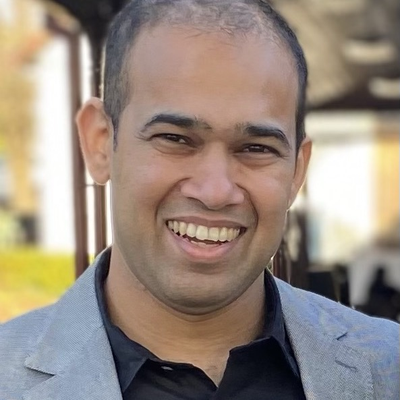
Vik Soni came up through systems and network engineering, racking hardware and running infrastructure across sites, before security became the whole job. He is accountable for the security of a large, regulated organisation’s products, end to end, and has sat in enough other people’s board meetings as their virtual CISO to know which questions never get asked. He has been through the forensics after the worst had already happened. He built and released his own AI security tool alone, in a month, then refused to monetise it. vik.so is free to use, and stays free by design.
Want a signed copy?
Register your interest and I’ll email you your order link and early-reader code. Orders close 31 October; copies post in early November.
Register your interestDecide Who Decides: How security leaders hold judgement when AI decides at speed. Vik Soni. First edition, 2026. 6 × 9 in, 240 pages. ISBN 978-1-7649455-0-9 (paperback), 978-1-7649455-1-6 (hardback), 978-1-7649455-2-3 (ebook).
Questions
Why register instead of buying now?
Because I want to know who’s reading it. Every registration gets a reply from me, not an autoresponder, with your order link and the early-reader code. You pay on Stripe’s checkout page when you’re ready, any time up to 31 October.
When will my copy arrive?
I order the print run at the end of October, sign every copy, and post them from Melbourne in early November. You’ll get an email when yours is on its way. Postage within Australia is included.
Paperback or hardcover?
You choose when you order: paperback A$40, hardcover A$65, both signed, both the same book. The code works on either.
Can you sign it to someone?
Yes. There’s a box at checkout for the name to sign it to. If it’s a gift, put their address as the shipping address.
More than one copy, or for a team?
You can order up to five at checkout. For more, reply to my email and we’ll sort it out.
I’m outside Australia, or I want Kindle
Signed copies post within Australia only. The paperback (A$34.99) and Kindle edition (about A$13) are on Amazon from early November. Register anyway and I’ll tell you the day they’re live.
Refunds
Changed your mind before your copy ships? Email orders@vik.so for a full refund. If it arrives damaged, I’ll replace it.
What happens to my details
Registering stores your name, email, where you heard about the book and, only if you give it, your LinkedIn profile. I use them to email you about ordering, and nothing else. Payment happens on Stripe’s own checkout page; your card details never touch this site. Privacy